
How To Critter-Proof Your Garden
How To Critter-Proof Your Garden
Are you wondering how to protect your precious veggies and flowers from critters this season?
Maybe you had bad luck last year and the squirrels ate all of your tomatoes? Or maybe a raccoon came and swiped up all your corn just as it was ripening? Ugh!
Critter-proofing your garden is not a one-solution-fits-all situation, but we have learned a couple tips and tricks to make sure your garden is as protected as possible so you can actually enjoy the fruits of your labor this season!
Read on to see our best recommendations for protecting your precious plant babies all season long!
#1. Location, location, location: Not all locations are the best location for a garden, pest-wise. The best location for a garden is out in the middle of a field or yard. This is not only because your garden will get the best sun all day, but also because there is less easy access for animals.
Consider the life of a squirrel. You live in the trees and hedges of the neighborhood. When a garden is built right under or next to your home, it provides a very easy way for you to jump into the garden and snack away!
By putting your garden out in the open – in the middle of your yard or a field – you are putting it far away from the normal habitat of squirrels, chipmunks, and other munching creatures. Natural predators like hawks fly overhead, scanning for tasty treats, and keeping your garden’s pests naturally under control. And as an additional perk – your garden will get full sun all day, which is always a win!
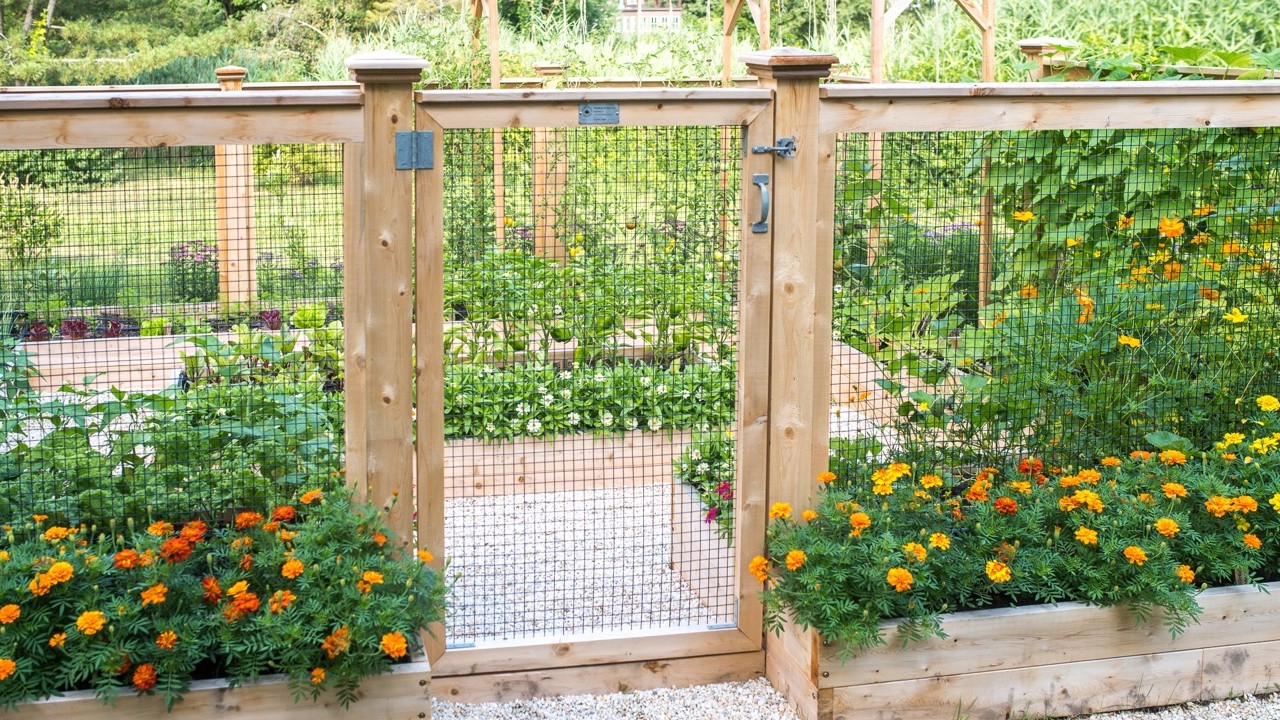
#2. Fencing: At Homefront Farmers we utilize organic methods of growing, and the best, most straightforward way of protecting your plant babies from deer and rabbits is by creating a physical barrier. We build our gardens out of untreated, long-lasting cedar wood with small-holed metal fencing so that these mammals walk around your veggie garden – not through it. Beware of using soft, plastic netting which many critters can chew through.
#3. Digging in with underground protection: If voles, moles, mice and rats are an issue for you, you may want to consider protecting your garden with ½” hardware cloth. You can lay it down like a rug underneath a raised bed or gravel, or trench it 6-9” down around an existing fence. Just make sure you aren’t fencing these critters inside, as well as out! You may need to utilize snap traps to eliminate an existing rodent issue.
#4. Put a roof on it: Are birds and squirrels eating all your tomatoes and peppers? Maybe raccoons are chomping on your corn just before it ripens! If so, you may need to consider putting a roof on your garden to prevent them from destroying everything. We can build back-pipe roofs, or build a fully enclosed cedar garden from scratch if you need a higher level of protection for your garden.
#5. Predator pee: Yes, some companies do produce various products containing urine, hot peppers, garlic and other yucky things that you can spray on or around your garden to deter mammals of all kinds. However, these products need to be re-applied after every rain (a total pain!) and are not always effective. Their organic certification also varies, so read every label and look for products that are OMRI listed since that means they’re meant for organic production. Either way, we think of this as a last – an imperfect – resort, when no other option is available.
#6. Adjust your crops!: No doubt about it, certain crops attract more pests than others! Corn, melons and blueberries are all high-protection crops, meaning they more readily attract birds, rodents and raccoons than other less sweet crops like leafy greens, herbs and flowers. If you can’t put a roof on your garden or put other required protection up, and you’ve had issues with these crops in the past, it might be time to adjust your crop list.
#7. Every year is different: Pest pressure can vary year to year. In a drought, pest pressure can often become worse because animals are looking for the water inside fruits like tomatoes and cucumbers. Other years, they may be less of an issue. If you’ve had issues in the past, take a step back and reconsider. What are your top goals for your garden, and how can you accomplish them with the set-up that you have?
And of course, we are here to help! If you have questions about your own set-up, or want to explore options about the best place and design for a new garden, email us at info@homefrontfarmers.com. We’d love to connect with you!
Share this entry
Homefront Farmers Blog

Why You Shouldn’t Plant Your Tomatoes Quite Yet
May 2, 2025
Tips for Eating Organic Strawberries
November 6, 2023

Best Way to Prepare your Homegrown Organic Bounty
November 6, 2023

Organic Vegetable Garden Season is Every Season
November 6, 2023
Crop Planner
Our Crop Planner offers a bounty of choices…. vegetables, herbs, edible flowers, fruit trees and bushes, so there is always something growing, flowering, ripening and ready to pick. Here are some examples of what we have pre-selected for you, and if you don’t see a variety you like, we will do our best to grow it for you. Homefront Farmers has the best varieties for cultivation in Connecticut.